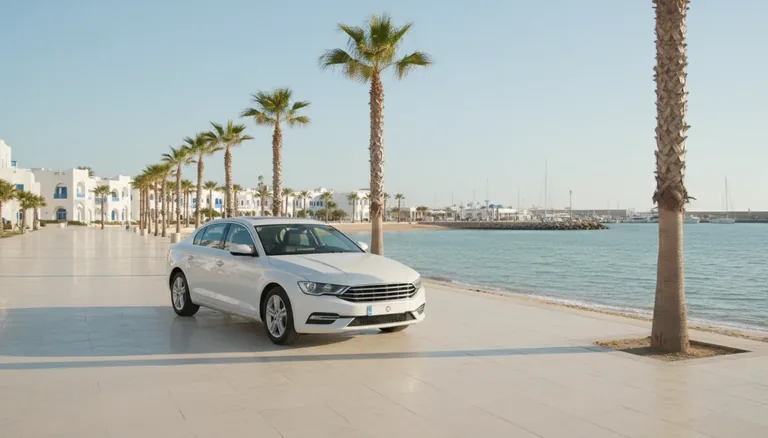
Tunisia Car Rental Insurance & Deposit Guide
Standard CDW in Tunisia still leaves an excess of about €300-1,500, and the dinar is a closed currency; here is how deposits, cover and cash really work.
Search & Compare Car Rental Deals
Free cancellation on most vehicles
How Car Rental Insurance Works in Tunisia
Knowing exactly what your rental car covers is essential for a worry-free trip. In Tunisia, third-party liability insurance is legally mandatory and is included in the base rate of every vehicle. Most providers also include basic Collision Damage Waiver (CDW) and theft protection, but these standard agreements still leave you responsible for an excess, or deductible, if damage occurs. That excess generally runs from around €300 to €1,500 on an economy car and up to about €2,500 on a larger SUV.
To shrink that liability, you can usually buy Super CDW or near-zero-excess cover for around €10 to €20 per day. When choosing a plan it helps to compare rental cars and see which providers include these upgrades transparently. Keep in mind that driving on unpaved or off-road tracks voids the cover entirely, which matters when driving in Tunisia to reach more remote sites.
| Typically Included in Standard CDW | Typically Excluded (you pay) |
|---|---|
| Collision damage to the bodywork above the excess | Tyres, wheels and rims |
| Basic theft protection for the vehicle | Glass, windscreen and mirrors |
| Third-party injury and property damage | Undercarriage and off-road damage |
| Lost keys and interior damage |
Even premium insurance options typically exclude damage caused by driving on unsealed dirt tracks. Always read the contract terms, because the standard waiver does not cover negligence or off-road use.
Deposits and the Truth About 'No Deposit' Deals
A security deposit lets the agency cover potential damage, missing fuel or traffic fines during the rental. International brands usually require a credit-card hold of about €1,000 to €1,500. It is wise to use a credit card rather than a debit card for this hold; if a dispute arises, the funds are simply blocked rather than taken directly from your bank balance.
Many local agencies offer more flexible alternatives, such as a cash deposit of around €300 to €500 in Euros, US Dollars or British Pounds. The cash is held and handed straight back when you return the car. Some local operators also promote 'no deposit' rentals, which are genuine but usually come with conditions.
- You may need to buy the agency's top zero-excess insurance tier to remove the deposit requirement.
- You might be asked to leave a cash deposit instead of a card pre-authorization.
- These deals are typically limited to economy models and may not apply to larger vans or premium cars.
The Closed Dinar: Cash, Cards and ATMs
The Tunisian Dinar (TND) is a closed, non-convertible currency, so you cannot legally buy dinars before you travel or take them out when you leave. Bring Euros, Pounds or US Dollars to exchange on arrival. Cards (Visa and Mastercard) are accepted at hotels, larger supermarkets and most rental desks, for example when picking up an Enfidha Airport car rental, but cash is still needed for tolls, small fuel stations and parking attendants.
ATMs are common in towns but usually cap a single withdrawal at around 400 to 600 TND and charge roughly 10 to 12 TND in fees. Keep your official exchange receipts: re-converting leftover dinars back to foreign currency at the airport on departure is limited and needs the original bank slips.
Leaving your deposit in Euro or US Dollar cash with a local agency is practical, because it means you do not finish the trip holding surplus dinars that you are not allowed to take home.
Common Rental Traps and How to Avoid Them
Most rental operators in Tunisia run honest businesses, but travelers do occasionally report problems in online forums. The usual ones are slow release of card holds, surprise fuel charges, and disputes over pre-existing bodywork damage. Steering clear of these keeps your plans, including any Hammamet day trips by car, running smoothly.
- Delayed deposit refunds: credit-card holds can take up to about thirty days to clear through banking networks.
- Phantom damage claims: being charged for a minor scratch under the bumper or on the roof that was already there at pickup.
- Insurance upselling: being pushed into extra cover that still excludes basic parts like tyres and glass.
- Passport withholding: some operators ask to keep your physical passport as collateral, which is not legal.
Never leave your actual passport with a provider as security; it is your primary travel document and must stay with you. A reputable agency only takes a clear photocopy or scan for the rental contract.
Your Pickup Checklist
A structured handover is the most effective way to protect your money. The main Hammamet car rental overview explains how the local market works, but running through a simple checklist at the counter is still the best safeguard against later disputes.
- Take timestamped photos and a continuous video of the whole car, inside and out, before you drive off.
- Make sure the agent records every scratch, chip or dent on the signed vehicle-condition report.
- Check the fuel gauge against the contract and confirm the return fuel policy (full-to-full is fairest).
- Avoid collecting or returning the car in the dark, where damage is easy to miss.
- Always ask for a signed, stamped receipt if you hand over a cash deposit.
| Inspection Step | Action to Take | Why It Matters |
|---|---|---|
| Exterior walkaround | Check lower bumpers, mirrors and wheel rims | Prevents disputes over minor cosmetic wear at return |
| Document check | Confirm the price is shown all-taxes-included (TTC) | Avoids surprise 19% VAT being added to the final bill |
| Tyre and glass check | Inspect the spare, tread and windscreen for chips | These parts are usually excluded from standard CDW |
Frequently Asked Questions
Is basic car rental insurance included in Tunisia?
What does the rental excess or deductible mean?
Are 'no deposit' car rental deals in Tunisia genuine?
Can I pay my security deposit in cash?
Should I leave my passport with the rental agency?
Ready to compare car rental deals in Hammamet?
Check live prices and availability from local and international suppliers.
Compare car rental deals